
5 major trends of 360 ° flexible neon tubes from 2026 to 2029: pixel control, bar stage design, and immersive light and shadow development direction
Abstract
With the continuous development of bar performances, immersive entertainment, cultural and tourism night tours, and digital stage design technology, 360 ° flexible neon tubes are evolving from traditional linear decorative lighting to programmable, interactive, and multi scene integrated lighting systems. From 2026 to 2029, omnidirectional uniform illumination, digital pixel control, immersive spatial modeling, real-time interaction, and modular engineering applications are expected to become important development directions for 360 ° neon tubes.
For bar stage and lighting designers, performing arts engineers, and landscape lighting procurement managers, future product selection should not only consider luminous brightness and appearance, but also comprehensively evaluate pixel density, control protocols, lamp flexibility, protection level, installation efficiency, and system maintenance costs.
Combined with the technical application direction of AOSHOWD22, D40 and other 360 ° flexible neon tube products, this paper analyzes the five major trends, engineering influence and coping strategies in the next three years.
1、 Trend 1: 360 ° omnidirectional illumination promotes the development of stage design lighting towards three-dimensional spatial modeling
Phenomenon interpretation:
Traditional LED neon lights usually adopt a single-sided or directional light output structure, suitable for building contours, flat lines, and local decorative lighting. 360 ° flexible neon tubes are designed with light source layout and diffusion materials to create a continuous luminous effect in the circumferential direction, providing more possibilities for suspended, circular, curved, and three-dimensional spatial shapes.
At the bar KTV、 In nightclubs and immersive commercial spaces, lighting is no longer just an accessory decoration of the building structure, but gradually becomes an important component of spatial visual design.
Key technical signals:
The combination of omnidirectional luminous lamp body and flexible structure enables designers to apply linear light sources to spiral, curved, suspended, and multi-level spatial installations. Compared to rigid lamps with fixed shapes, flexible structures have greater freedom in shaping within the appropriate bending direction and radius range.
However, 360 ° emission does not mean that the light intensity in all directions is completely consistent, and the actual uniformity of emission still needs to be judged based on the optical structure and sample testing.
What does this mean for designers
The lighting design of bars will evolve from simple wall outlines to spatial curves, three-dimensional installations, and multi angle viewing effects.
How to deal with:
Clearly define the diameter of the lamp body, minimum bending radius, installation direction, viewing distance, and fixed structure during the scheme design phase.
For complex shaped devices, physical bending tests and lighting effect verification should be conducted first to avoid excessive bending affecting the structure and internal wiring of the lamp body.
2、 Trend 2: DMX512 and Art Net pixel control drive the digital upgrade of 360 ° neon tubes
Phenomenon interpretation:
Traditional constant brightness or overall color changing neon lights mainly serve decorative lighting functions, while 360 ° neon tubes using independent pixel control technology can achieve segmented chasing, dynamic gradient, music rhythm linkage, and programmable animation.
With the increasing demand for dynamic content in bar stage design and immersive spaces, pixel density, number of control channels, and software compatibility have gradually become important indicators for engineering selection.
Technology driven:
SPI pixel control technology can be used to drive compatible LED pixel ICs, DMX512 provides digital lighting control channels, and Art Net transmits DMX control data through Ethernet.
Through compatible Art Net to SPI controllers, LED pixel neon tubes can be connected to lighting control systems such as MADRIX to achieve pixel mapping and dynamic effect production.
For example, if a 360 ° pixel neon tube is configured with 40 independent RGB pixels per meter, it typically requires 120 RGB control channels per meter. The actual control capacity needs to be determined based on IC grouping, controller ports, and Universe allocation.
Industry Technology Application Case: AOSHOW
AOSHOW provides product portfolio solutions around 360 ° flexible neon tubes, LED pixel lamps and supporting controllers.
D22, D40, and other 360 ° light-emitting series can choose the corresponding optical structure, pixel configuration, and control method according to specific models. For products that support SPI pixel control, they can be connected to the Art Net network through a compatible controller and combined with software such as MADRIX to achieve dynamic lighting effects.
This way of matching the lamp body with the control system helps engineers to plan pixel addresses, power loads, and controller capacity uniformly during the scheme design phase.
What does this mean for entertainment engineering companies
In the future, product competition will no longer be limited to price comparisons per meter, but will also involve control compatibility, pixel accuracy, system scalability, and debugging efficiency.
How to deal with:
Confirm the LED driver IC, pixel count per meter, RGB channel sequence, controller support protocol, and maximum output capacity before procurement.
It is recommended to complete controller IP address, Universe allocation, signal topology, and actual animation testing in advance for large-scale projects to reduce on-site debugging risks.
3、 Trend 3: 360 ° flexible neon tubes become an important design element for immersive bar stage design
Phenomenon interpretation:
Bars, nightclubs, and commercial entertainment spaces are increasingly emphasizing visually recognizable scenes. Lighting not only undertakes lighting tasks, but also participates in spatial theme expression, music rhythm presentation, and on-site atmosphere shaping.
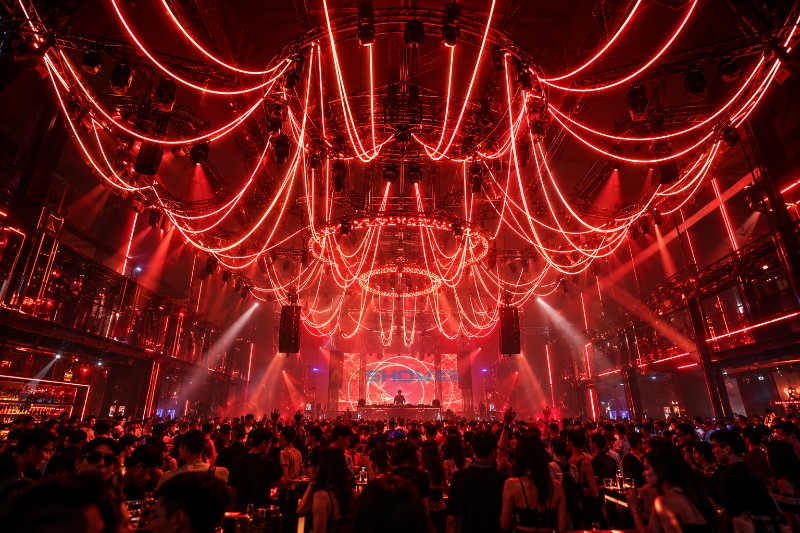
360 ° flexible neon tubes have the characteristics of continuous linear light emission and flexible styling, and can be used above DJ stages, in the center of dance floors, in suspended art installations, in irregular ceilings, and in immersive channels.
In a multi angle viewing space, the omnidirectional luminous structure can reduce the visual limitations caused by the installation direction of traditional single-sided lamps, but the specific effect still depends on the lamp body design and on-site layout.
Technological development direction:
In the next three years, the combination of 360 ° flexible neon tubes, LED pixel matrix, stage moving head lights, laser lights, and digital visual content is expected to further enrich the lighting solutions for bar performances.
Through zone control and music synchronization, lighting rhythms, colors, and spatial animations can be switched according to different stages of the performance.
What does this mean for bar lighting designers
Lighting design needs to pay more attention to the overall effect of the space, rather than choosing a specific type of lighting fixture in isolation.
How to deal with:
It is recommended to design lighting zones according to the DJ main stage, dance floor, audience area, passage, and decoration area.
Select the appropriate lamp body diameter, brightness, pixel density, and control method based on the viewing distance and visual target of different areas.
For scenarios that require dynamic chasing and music linkage, programmable pixel models should be prioritized for evaluation, rather than treating ordinary constant bright neon lights directly as programmable products.
4、 Trend 4: TouchDesigner expands the artistic application of 360 ° neon tubes through real-time interaction
Phenomenon interpretation:
Traditional neon lighting systems typically rely on fixed programs or preset scenes to operate, while real-time interactive technology can dynamically change lighting performance based on music, human movements, sensor and camera data.
TouchDesigner, as a real-time visual programming platform, can combine audio analysis, human motion capture, and interactive sensors to generate dynamic control data.
When the 360 ° pixel neon tube is connected to TouchDesigner through a compatible control system, it can achieve music rhythm driving, motion triggering, dynamic chasing, and multi area lighting interaction.
Potential application scenarios:
In the bar dance floor, the speed of light chasing and color changes can be adjusted through audio analysis.
In commercial art installations, different lighting scenes can be triggered by sensors.
In cultural and tourism night tours, 360 ° flexible neon tubes can be combined with interactive devices, environmental sound, and digital content to create a participatory light and shadow experience.
Key technical challenges:
The interactive effect not only depends on the lamp body itself, but also involves multiple links such as data acquisition, software processing, network transmission, controller output, and pixel response.
System latency, frame rate stability, sensor recognition accuracy, and network reliability may all affect the final experience.
What does this mean for engineering companies
Future interactive lighting projects require the ability to simultaneously install lighting fixtures, control programming, network configuration, and on-site debugging.
How to deal with:
Complete interactive logic design, control protocol matching, and pixel mapping testing before project implementation.
For interactive devices that require long-term operation, backup lighting scenarios should be set up in case of sensor abnormalities, network interruptions, and software failures to ensure the continuity of system operation.
5、 Trend 5: Modular installation, protective performance, and long-term maintenance become the focus of engineering selection
Phenomenon interpretation:
With the increasing application of 360 ° flexible neon tubes in outdoor cultural and tourism, commercial spaces, and large-scale stage design projects, the protection capability, installation efficiency, and long-term maintenance cost of products will receive more attention.
Compared to simple decorative lighting, large-scale projects typically involve longer lamp body circuits, multiple power supply zones, controller networks, and complex installation structures.
If there is a lack of reasonable planning in the early stage, problems such as pressure drop, uneven brightness, abnormal signals, water ingress at joints, and maintenance difficulties may occur.
Technological development direction:
In the next three years, 360 ° flexible neon tubes are expected to further develop towards standardized installation accessories, modular connections, partitioned power supply, and systematic maintenance.
For outdoor projects, protection level and weather resistance are still important indicators. IP65, IP66 and other levels should be confirmed based on specific models and test reports, and the protection level of the lamp body cannot be directly equivalent to the protection capability of the entire installation system.
What does this mean for procurement managers
Engineering procurement requires a comprehensive evaluation of product unit price, installation labor, power supply configuration, controller cost, maintenance convenience, and spare parts supply.
How to deal with:
Confirm the working voltage, rated power, maximum recommended power supply length, minimum bending radius, installation method, and joint protection scheme during the product selection stage.
For long-distance installation, voltage drop calculation should be carried out, and replenishment points should be reasonably set according to actual power and line conditions.
For outdoor and high-altitude installation projects, full consideration should also be given to structural fixation, environmental temperature, wind load, cable protection, and later maintenance conditions.
6、 Outlook for the 360 ° Flexible Neon Lamp Industry from 2026 to 2029
In the next three years, 360 ° flexible neon tubes are expected to continue to develop in five directions: omnidirectional illumination, digital pixel control, immersive space design, real-time interaction, and modular engineering.
For bar stage and lighting designers, 360 ° flexible neon tubes can provide more lighting design options for curved shapes, suspended structures, and three-dimensional spaces.
For entertainment engineering companies, the core competitiveness of future projects not only comes from lighting hardware, but also from pixel control, network planning, software programming, and engineering delivery capabilities.
For cultural tourism night tours and art installation projects, the combination of flexible neon tubes with real-time interaction, digital content, and environmental perception technology is expected to create a richer light and shadow experience.
AOSHOW revolves around D22, D40 and other 360 flexible neon tube series, combined with LED pixel controller, Art-Net network control and MADRIX and TouchDesigner compatibility schemes, to provide different products and system matching options for bars, stage stage tours, night tours and artistic lighting installations.
From 2026 to 2029, the competition in the 360 ° flexible neon tube industry is expected to shift from simply comparing the price and appearance of the lamp body to a comprehensive competition in terms of luminous effect, digital control compatibility, engineering installation efficiency, and long-term maintenance value.
For lighting designers and engineering procurement personnel planning to use 360 ° flexible neon tubes, understanding the optical structure, pixel control, network architecture, and engineering installation requirements in advance will help improve the feasibility and long-term operational reliability of the solution.
Prediction explanation: This article analyzes the development direction of LED flexible lighting, pixel control, and digital stage design technology up to 2026. The content from 2027 to 2029 is a trend forecast, not a definite market growth commitment. The specific product performance and engineering effects should be based on the corresponding model specifications, test results, and actual application conditions.